
Overcoming social anxiety: Immediate tips for coping with anticipation and anxiety in social settings
Discover immediate coping strategies for social anxiety, ranging from deep breathing techniques to cognitive appraisals. Learn how to shift focus, harness the power of essential oils, and visualize success in social situations with patience and self-compassion.
Rushmita Bansal
3/25/20247 min read
Remember, overcoming social anxiety is a journey, and it's okay to take it one step at a time. Be patient and gentle with yourself as you explore these techniques, and remember that you are worthy of love and support every step of the way. With practice and self-compassion, you can learn to manage social anxiety and live a fulfilling life filled with meaningful connections and experiences. Thing will get better.
Some of these techniques are really helpful in the long-term too, and I will also be posting about other such techniques from time to time.
PS: Remember it is okay to ask for help, be it from your friends, family, or someone you feel safe with, and if you think you need professional help, do not hesitate for one bit. You are worth all the love and efforts and remind yourself that you are doing amazing and that is enough.
Living with social anxiety is like a battle – the anticipation of being in social interactions even before you are in that situation and the actual anxiety that arises due to being in social situations. In this blog, there are certain immediate coping strategies that can provide you with some relief at that moment when facing your thoughts and fears. The anticipation or the anxiety can be really taxing and can leave us drained by the end. Our main goal in the beginning is not taking too much on our plate. I mean, the thought of not feeling that anxiety at all and navigating through life with full control and going after what we want is a dream come true but what is necessary throughout this journey is gradually reaching that level to make sure it addresses our underlying problems and root causes and helps us in the long term.
1) Deep breathing
a) Deep breathing can be really helpful in calming down our nerves. Here, all you have to do is whenever you feel that uncomfortable feeling in your stomach, take a deep breath and leave a deep breath. Your exhale should generally be stronger than your inhale as if you are throwing something out of your body. Like your shoulders would move up and use some force to exhale all that air out through your mouth.
b) Other type of breathing exercise is where you inhale, then count for 3 to 4 seconds, exhale and count for 3 to 4 seconds. Another variation is where all the activities including inhale, exhale and the pause are for equal amount of time. So, inhale, pause, exhale, and then pause – all for 4 seconds.
Throughout this exercise, try to remain relaxed and repeat it till you feel better.
2) Chewing gum
Now, going a little into biology, chewing gum can help trigger your parasympathetic nervous system – the one that helps you relax and calm down. So, the repeated action of chewing results in production of saliva and this action is brought about by activation of parasympathetic nervous system.
3) Getting out of our head
When we are in anxiety, all we can think of or focus on is that uncomfortable sickening feeling in our stomach. We are too much inside our head, engaging with our thought patterns that are not really helping or empowering us.
So how do you get out of your head? Shift your attention. Focus on your physiological symptoms and try to get into a relaxed state. For example, recognizing what you are going through physically, (sweating, palpitations, nauseous feeling, and others) instead of focusing on anxiety can reduce the anxiety that you are experiencing. This actually really worked well for me in a multitude of situations.
You can also look for distractions like talk to a friend you feel safe with, look outside a window, listen to a song (weightless is a great one for anxiety-relief), engage in physical activity (maybe just start walking where you are), get out of that situation if possible (not always though – it can lead to us being avoidant in our approach which will only increase our anxiety every time we are in that same situation again) or focus on your breathing.
4) Being free from judgments
Be in any situation, if you are in anxiety, do not pass any judgments on your thoughts or fears. We might find this difficult in the beginning but let’s start from understanding what do we mean by passing judgments. It means forming an opinion which could be like this is wrong or right, good or bad, or telling ourselves that there’s a certain way thing are “supposed to be”. So, basically making an evaluation of criticism or approval depending on what we believe.
How can we not do this? Look out for thought patterns that do not empower us or make us feel neutral or good. Instead of labelling experiences just let them be or reframe those judgments as your personal opinions rather than making it sound like a fact (we all go through different experiences in our life that shape the way we look at things or our reality and perception so try to think that not everyone thinks that that particular situation was good, bad, or embarrassing or what we fear) and be kind to yourself and practice self-love (to get a better understanding about self-love you can read the 1st four blogs).
5) Using essential oils
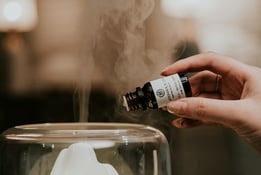
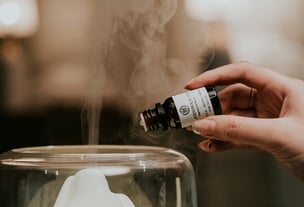
Carry a little bottle of essential oils like lavender and chamomile. You can even find these as wrist roll-ons. They have relaxing properties and create a soothing environment. They reduce the amount of stress that you have and, regulate mood and emotions. You can even diffuse them while having a bath or apply them on your pulse points.
6) Think of a safe space
Your safe space will make you feel secure, comfortable, relaxed, and supported. This space can be a person, a place, your pet, a hobby, or anything where you will not mind being just you. Any place that makes you feel like home or how you would want a home to feel like.
7) Cognitive appraisal
It means how do we evaluate or assess a situation. This assessment of the situation can impact how we react or respond to it, emotionally and behaviourally. This is primary appraisal. Now secondary appraisal is how we assess ourselves with respect to the situation, as in our ability to cope with the situation depending on the resources, we think we have.
In short, the hack here is that relabel your anxiety as your excitement. This may work for some situations and the reason is that the biological processes and responses involved in anxiety and excitement are similar and therefore just the thought that it is excitement that you are feeling in that situation can make you feel more confident, positive and lead to a better performance. This will make us feel that we have more control over the situation.
For instance, when I feel anxious about a social interaction, being in a gathering or any people related task, I try to make myself believe that I am really excited instead of anxious and visualize the interaction as how I want it to go.
8) Smile or laugh
A genuine smile or a laugh in that situation can really reduce anxiety to a great extent. I know that passing a smile or actually laughing in such a situation is really difficult but remembering a time where you felt like smiling or laughing can be your way out. Smiling or laughing will cause the release of endorphins (mood elevators and painkillers), dopamine (happiness and pleasure) and serotonin (mood stabilizer) and trigger your parasympathetic nervous system that will help you feel relaxed and calm.
9) Visualization
This one is especially helpful to deal with anticipation. It involves mentally imagining ourselves in a calm and confident state, and successfully being able to navigate through social interactions with ease.
Close your eyes and picture yourself in a social situation that typically triggers anxiety. Visualize yourself feeling calm, confident, and in control, and imagine the interaction to go smoothly and positively. You re-affirm your worth and give yourself the strength you need. It increases your confidence and your trust in yourself and your capabilities.
10) Exposure
While being in social situations, I would say that do not exert yourself by being in social situations to the extent of being extremely uncomfortable that you breakdown. One of the best things that I did was slowly and steadily steeping out of my comfort zone – basically, taking baby steps.
So, I used to be more comfortable in social situations with people I trusted or a friend group. Now I started getting out of my head in those situations and tried to make myself comfortable using most of these techniques until I felt a lot at ease in those situations. Then I moved to being comfortable socially with just one person beside me. Slowly I tried to get myself to be okay even when I was own my own but with 1 to 2 people in that social interaction and then 5 to 10. I gradually started exposing myself to situations that triggered my anxiety but not in a way that I could not handle.
Like as you can see, they were out of my comfort zone but I did not jump in a situation that felt like crossing the Antarctic Ocean or The Drake Passage. Jumping over little puddles also counts.
The process went like figuring out the situations that make me anxious and then going to the one that felt least threatening or the most near my comfort zone but outside my comfort zone. Then moving from the least to most anxiety triggering situations slowly as and when I felt at ease in the previous situation. It is also possible that maybe once you felt that you successfully navigated through a situation and the next time you are in that same situation you feel anxious. It is necessary to remember that all your efforts still count and that you did make progress and this is very normal and common thing to happen. Think about how long you have been experiencing this or how intensely you feel that anxiety – give it time and do not be this harsh on yourself.